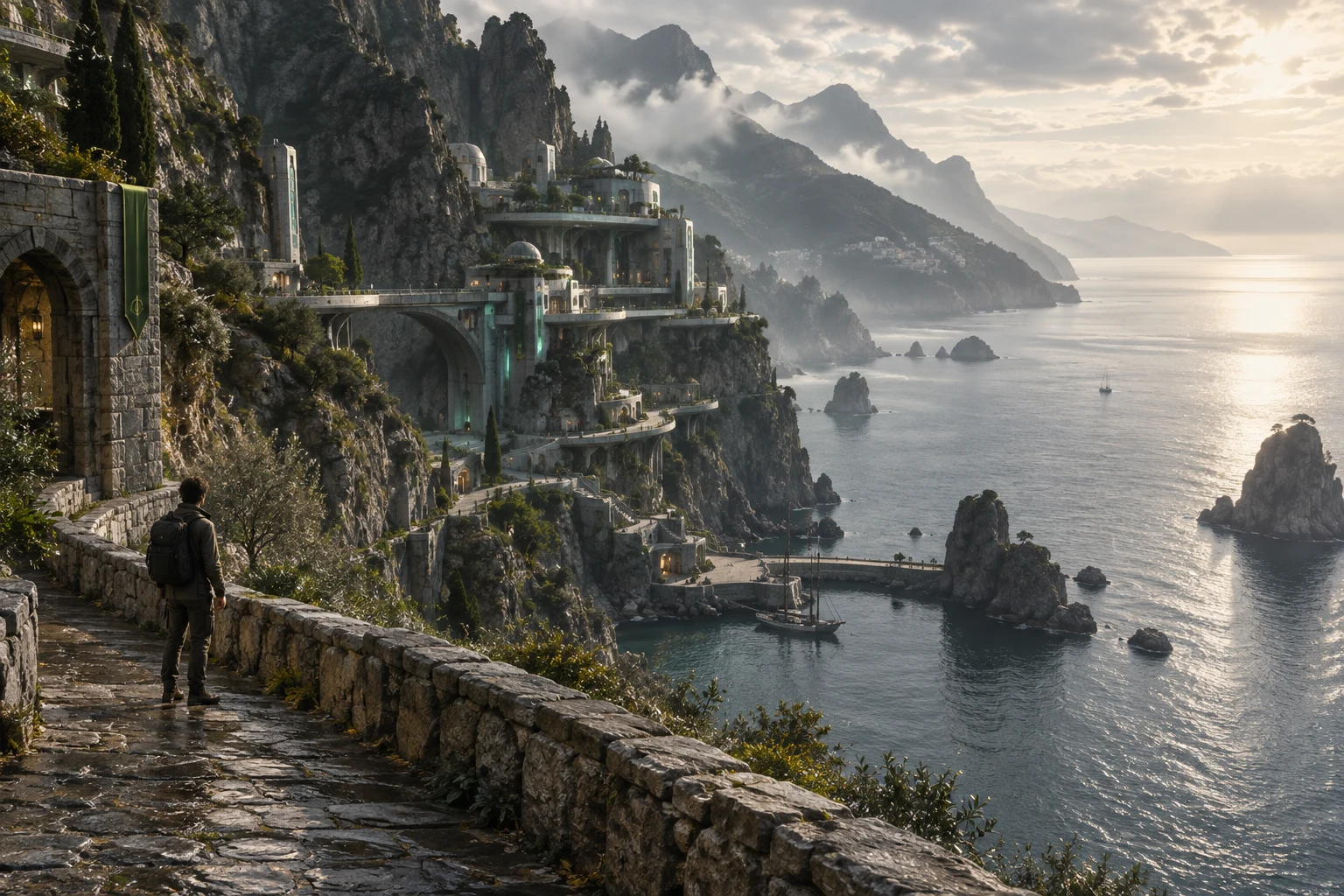
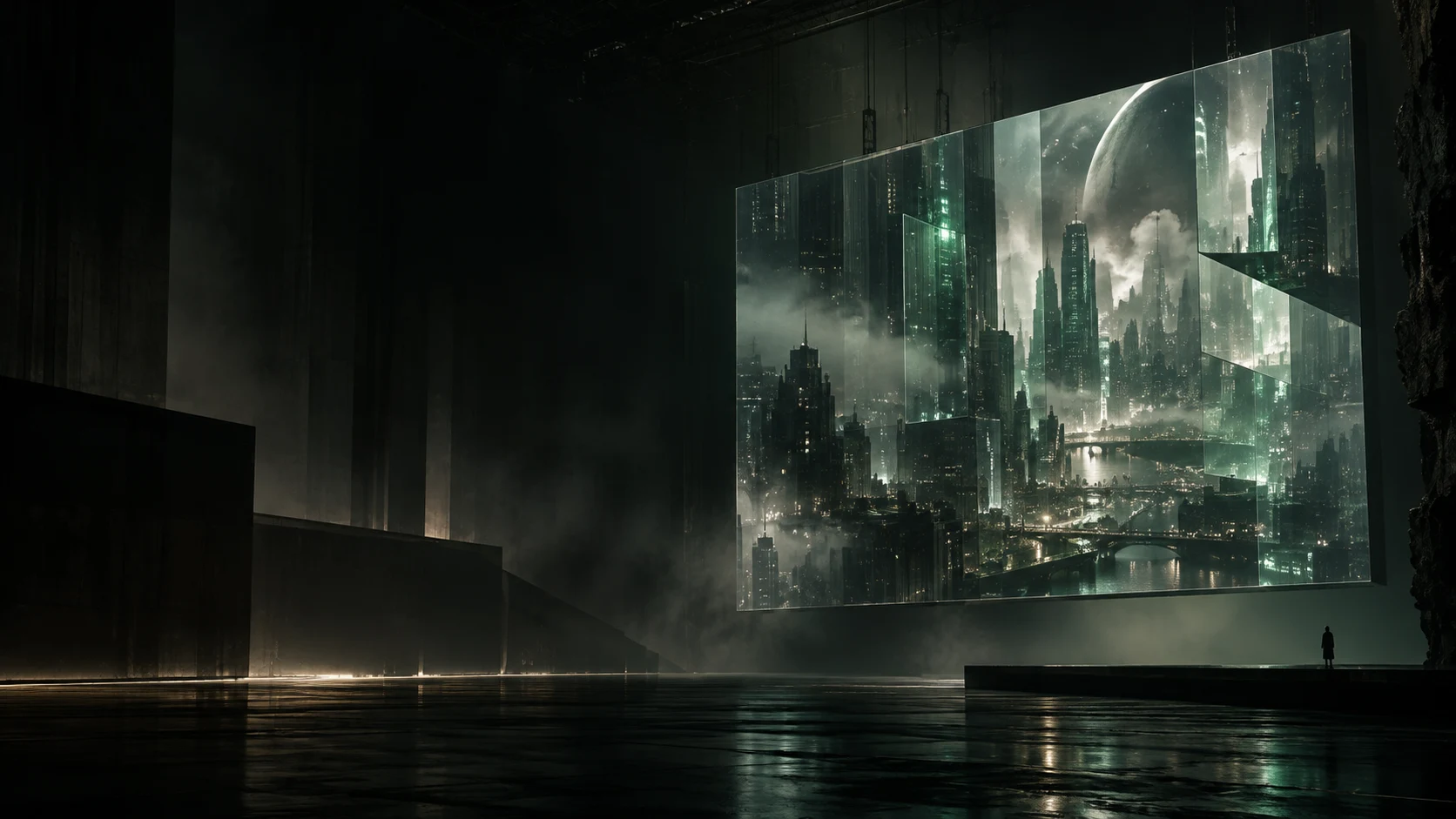
Start with an experience
The most useful question about AI-native entertainment is not how many seconds a model can generate. It is what an audience can experience that would otherwise be difficult to make. A short film, a playable scene and a voice-led performance demand different forms of attention. Treating them as interchangeable outputs obscures the creative decisions that make each one work.
An image can establish atmosphere almost immediately. A story must keep its promises over time. Character, geography, rhythm and consequence still need to be shaped. The novelty of a production method may open a door; the experience beyond that door determines whether anyone stays.
A production, not a prompt
Generation belongs inside a larger chain of work: research, references, performance direction, iteration, editing, sound and delivery. A promising shot can create new work elsewhere. A change of costume may require a sequence to be rebuilt. A convincing voice still needs timing, context and an appropriate relationship to the character.
The practical unit is therefore the finished scene, with the decisions and materials that support it. Teams should preserve versions and record why a particular take was chosen. This makes creative judgment visible and makes a production easier to revise.
Build a world with boundaries
Film, games, music and virtual characters can meet inside the same fictional world. That does not mean every story should expand into every format. Each extension needs a purpose: a game might let an audience test a choice; a song might carry a character's memory; an interview might explain how an image was made.
FRAME ZERO follows these intersections through the people, tools and businesses behind them. Our starting point is the work itself. We look for the decisions that make a new form meaningful, and for the production systems that allow those decisions to survive beyond a single striking frame.